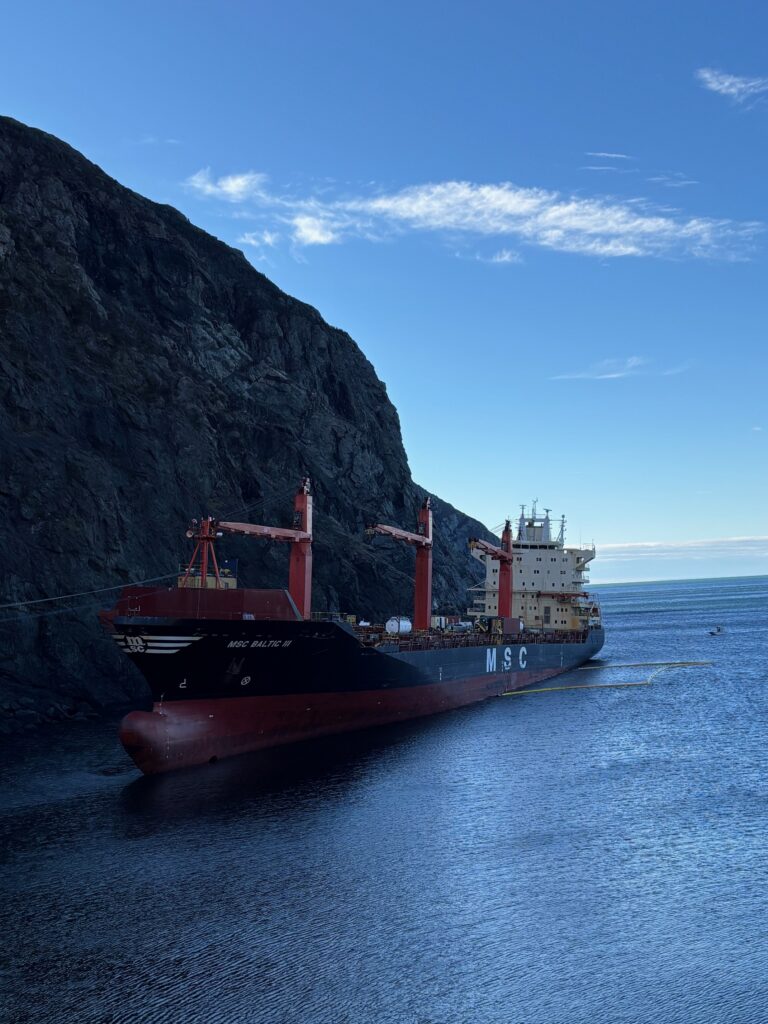
FFAW continues to actively engage in discussions regarding the removal of the MSC Baltic III, with a strong focus on ensuring that the interests of fish harvesters and coastal communities remain front and center throughout this process.
FFAW staff Katie Power, Jeff Griffin, and Julian Ryan attended a stakeholder meeting on Friday, May 1st, where they received a detailed technical briefing from the company leading the removal, Resolve Marine, on the planned wreck removal approach.
Resolve Marine is a world-renowned marine salvage firm based in South Florida with extensive global experience in complex wreck removals. The project also includes partnerships with local companies, including JCL Investments Inc., which is supporting construction work such as improvements to nearby roads and access paths, and Newco Metals Ltd., which will be responsible for metal scrapping, recycling, and export.
The current plan prioritizes completing the full wreck removal within a single operating season; however, members should be aware that broader site restoration and full recovery of the area may extend beyond this timeline.
Dillon Consulting Limited is undertaking an Environmental Baseline Study on the MSC Baltic III and its removal. FFAW has been engaged in this work and will continue to meet with Dillon throughout the process to ensure harvester knowledge and concerns are reflected.
The removal team is working closely with the Canadian Coast Guard, the municipality, and other stakeholders, and has committed to providing regular daily updates and progress reports as work advances.
At this stage, most pollutants have reportedly been removed from the vessel, with only limited residual materials remaining onboard. The removal itself is complex due to significant structural damage to the vessel, and work is expected to involve dismantling the ship in sections and transporting materials ashore for processing and recycling.
Members should also be aware that some land-based work is planned to support the removal, including temporary upgrades to access routes in the area. While proponents have indicated these changes are temporary and that the site will be restored, concerns have been raised locally regarding potential impacts to the surrounding environment and fishing areas. FFAW is continuing to monitor these developments closely.
Given the proposed timelines, members should not expect any increase in marine vessel traffic related to the project until July.
As always, key considerations for FFAW include:
– Potential impacts on fishing activity and access in the surrounding area
– Environmental protection and monitoring before, during, and after removal
– Clear and timely communication with harvesters on all operational updates
– Ensuring that harvester knowledge is reflected in decision-making processes
FFAW will continue to monitor developments closely and share updates as more information becomes available.
Members with concerns or specific questions are encouraged to reach out to Katie Power, Industry Relations Representative, at kpower@ffaw.ca or 709-576-7276 ext. 213.