
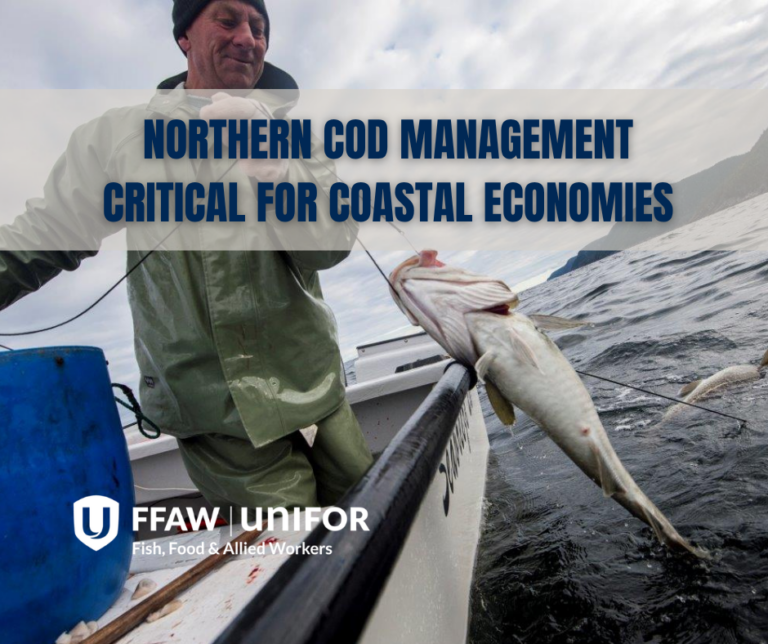
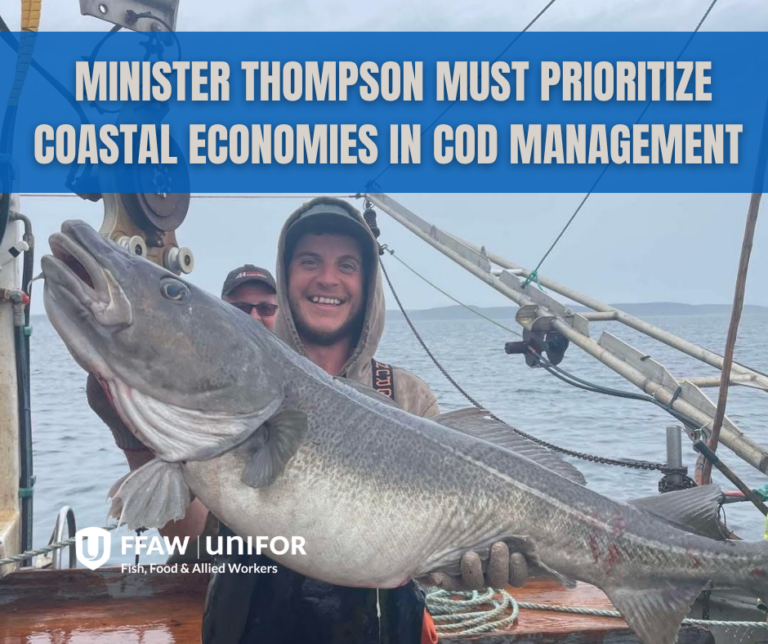
NORTHERN COD MANAGEMENT CRITICAL FOR COASTAL ECONOMIES
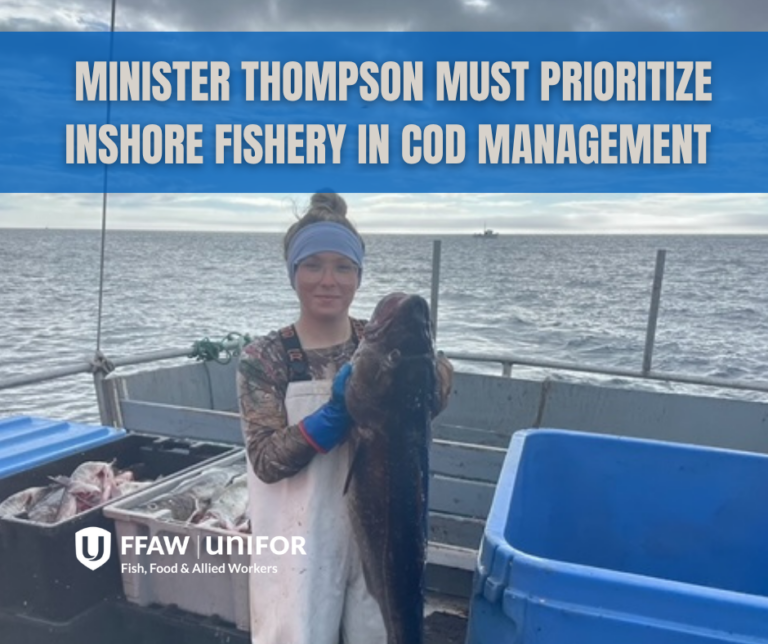
FFAW-Unifor is calling on federal Fisheries Minister Joanne Thompson to deliver a fair and balanced management plan for 2J3KL northern cod that protects the livelihoods of inshore harvesters and coastal communities in Newfoundland and Labrador.
As the Minister considers decisions on Total Allowable Catch (TAC) for the 2026 Northern cod fishery, the Union is urging the federal government to:
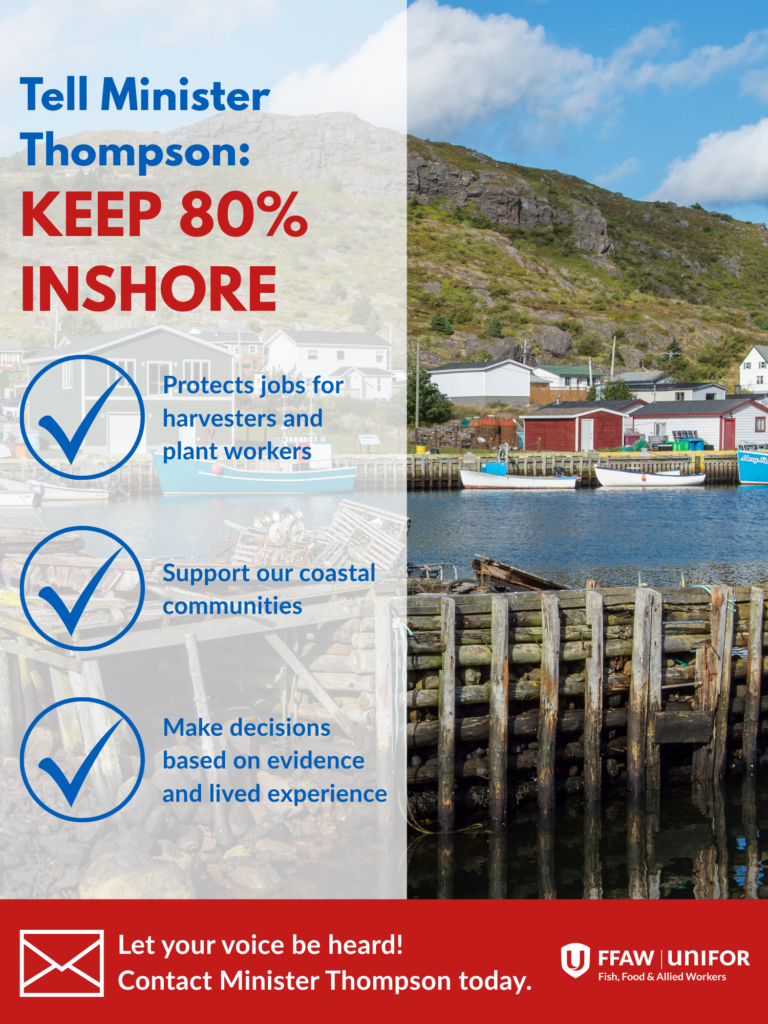
- Maintain that 80 per cent of the Canadian quota be allocated to the inshore fleet
- Uphold the 85/15 sharing arrangement between 3KL and 2J


Concerns with Offshore Expansion
FFAW points to the federal government’s decision to open the Northern cod fishery to domestic and foreign offshore draggers far below the promised 115,000-tonne threshold as a premature move that undermined fair sharing and rebuilding efforts.
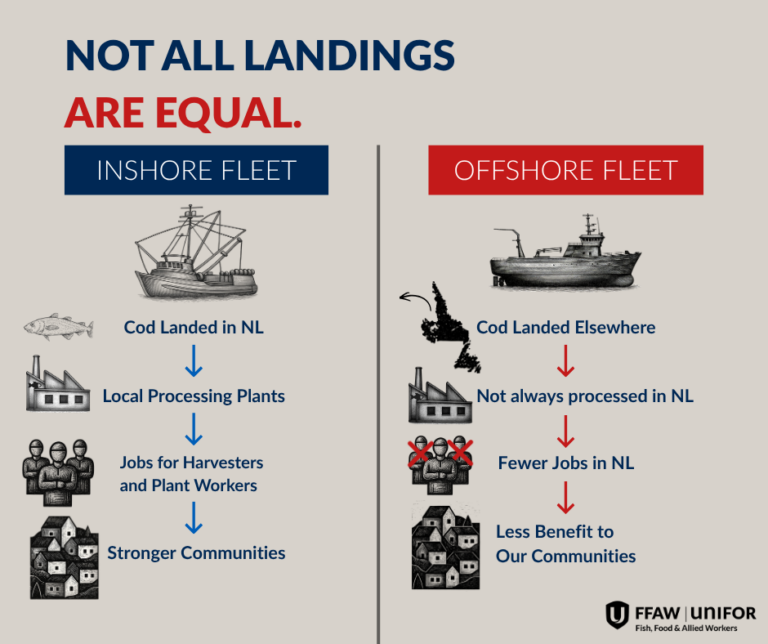
Fish landed by the inshore fleet supports jobs in processing plants and communities. Offshore landings, by comparison, creates far less economic benefit to the people of Newfoundland and Labrador. This is a critical distinction that must not be ignored.
Challenging Misconceptions About Stock Distribution
The Union is also pushing back against claims that Northern cod biomass is predominantly concentrated in 2J waters.
Decades of tagging data have shown that northern cod is a migratory stock complex, with seasonal movements between inshore and offshore waters. These migrations link offshore areas such as Hamilton Bank with inshore fishing grounds from Labrador to northern 3L. Catch rates also remained high in 3KL throughout the summer and fall in areas not sampled by the research vessel survey.
Decisions must be based on the full scope of available science and on-the-water knowledge, not narrow interpretations that favour one region over another.
Call for Stronger Science and Monitoring
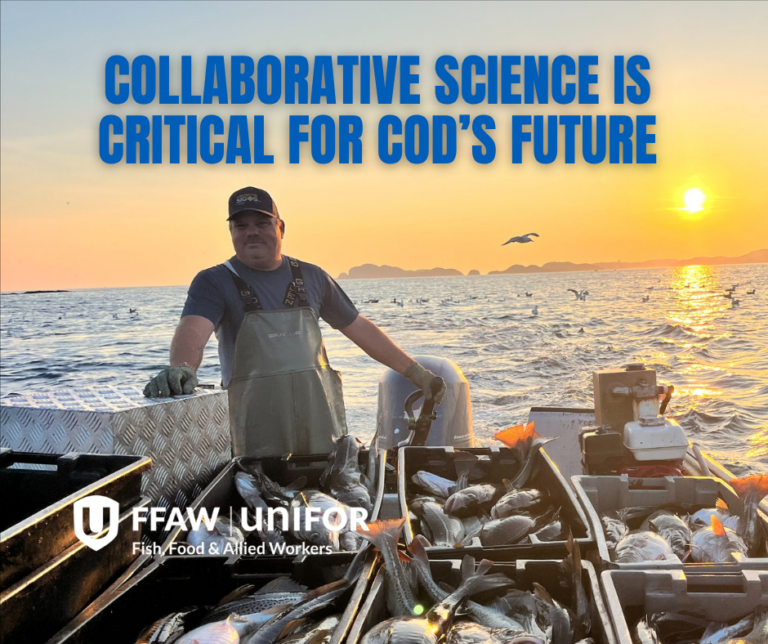
FFAW has also raised concerns about the recent cancellation of the Cod Sentinel Survey, emphasizing the need for continued investment in collaborative science programs.
The Union stresses that incorporating harvester knowledge is essential to ensuring transparent, credible stock assessments and informed management decisions.